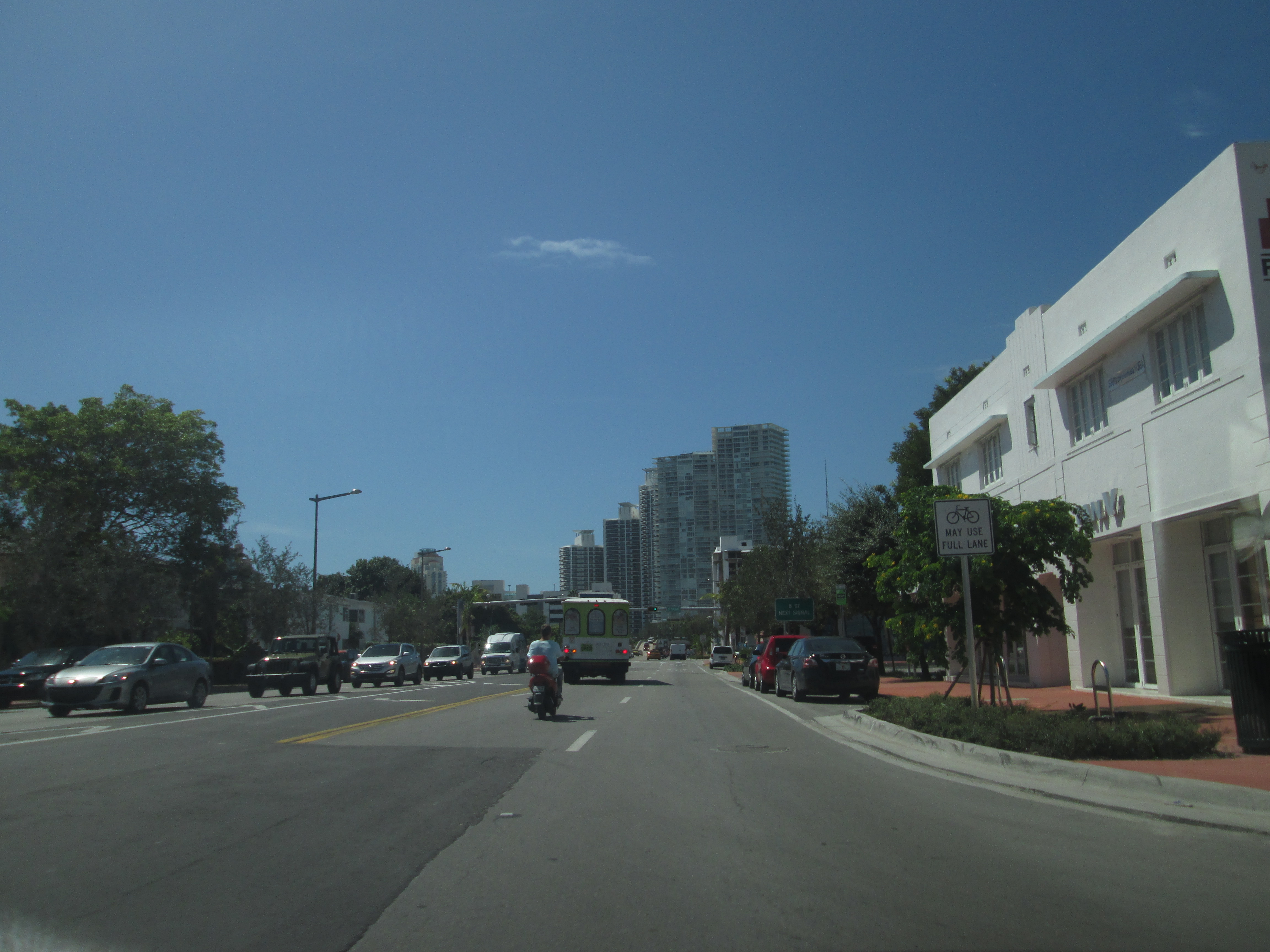
Miami Beach's sewer system along Alton Road cannot handle the additional development the Live Local Act could bring, city engineers have concluded.
A Public Works Department capacity analysis, prepared for the Land Use and Sustainability Committee's (LUSC) upcoming meeting, found that the existing sewer between 5th Street and 15th Street "does not have sufficient capacity to reliably accommodate an increase in demands."
Four developers have filed Live Local Act applications for sites along the corridor: 663 Alton Road, 740 Alton Road, 824 Alton Road and 1575 Alton Road. One project, at 663 Alton Road, has been approved with infrastructure conditions. The other three remain under review.
The finding gives the committee a concrete infrastructure argument as it weighs whether to create alternatives to the state law. The Live Local Act requires cities to allow multifamily housing in commercial zones when at least 40% of units are affordable for 30 years, preempting local zoning and height limits. In Miami Beach's commercial districts, a developer could propose a floor area ratio (FAR) as high as 6.375.
City resists loosening development rules
City Manager Eric T. Carpenter wrote in a committee memorandum that the administration does not recommend changing the city's Land Development Regulations right now. No Live Local Act project has been approved in Miami Beach to date, Carpenter noted, and loosening development rules to head off applications could backfire by encouraging more property owners to file them.
Two alternatives are on the table. The first would let the City Commission grant waivers to exceed building height limits, requiring developers to design projects consistent with the surrounding neighborhood's scale. The second would create a separate process for FAR bonuses for non-transient residential housing, approved case by case without raising FAR district-wide.
Commissioner Joseph Magazine, who first referred the item to the committee on March 13, 2024, sponsors the discussion. The item has been deferred or continued at least seven times since then.
Upgrades could unlock future capacity
The engineers' analysis also flagged two earlier projects that strained the same corridor. A development at 500 Alton Road would have generated 57,630 gallons per day; the gravity sewer could not handle it, so flows were diverted to Pump Station No. 31, south of 5th Street. A 2024 study for the CitizenM Hotel at 1634 Alton Road found the sewer already lacked capacity for existing peak demands.
Public Works recommended upsizing gravity sewer mains along Alton Court from 17th to 15th Street, along Alton Road from 15th to 11th Street, and along 11th Street to Pump Station No. 1. If those improvements are completed, the system could likely handle additional demand from 1575 Alton Road, the analysis stated.
Water capacity is less of a concern. The analysis found the system appears sufficient, provided the MacArthur Causeway Water Main Upsizing Project is built. That project would replace a 20-inch main with a 30-inch main and is in design, awaiting coordination with Miami-Dade Water and Sewer Department.
The commission has also been exploring legislative and legal responses to the Live Local Act. On July 22, commissioners considered a resolution authorizing the city attorney to collaborate with the office of Commissioner Vicki L. Lopez on proposed state-level amendments for the 2027 legislative session. A separate resolution would direct the city attorney to evaluate legal options to challenge the law, coordinating with the city of Miami. The final disposition of both measures has not been confirmed in public records.
The LUSC meets Thursday, Sept. 24, at 1 p.m. in Commission Chambers and on Zoom. Commissioner David Suarez chairs the committee. Any code amendment the committee recommends would require a separate City Commission referral to the Planning Board.