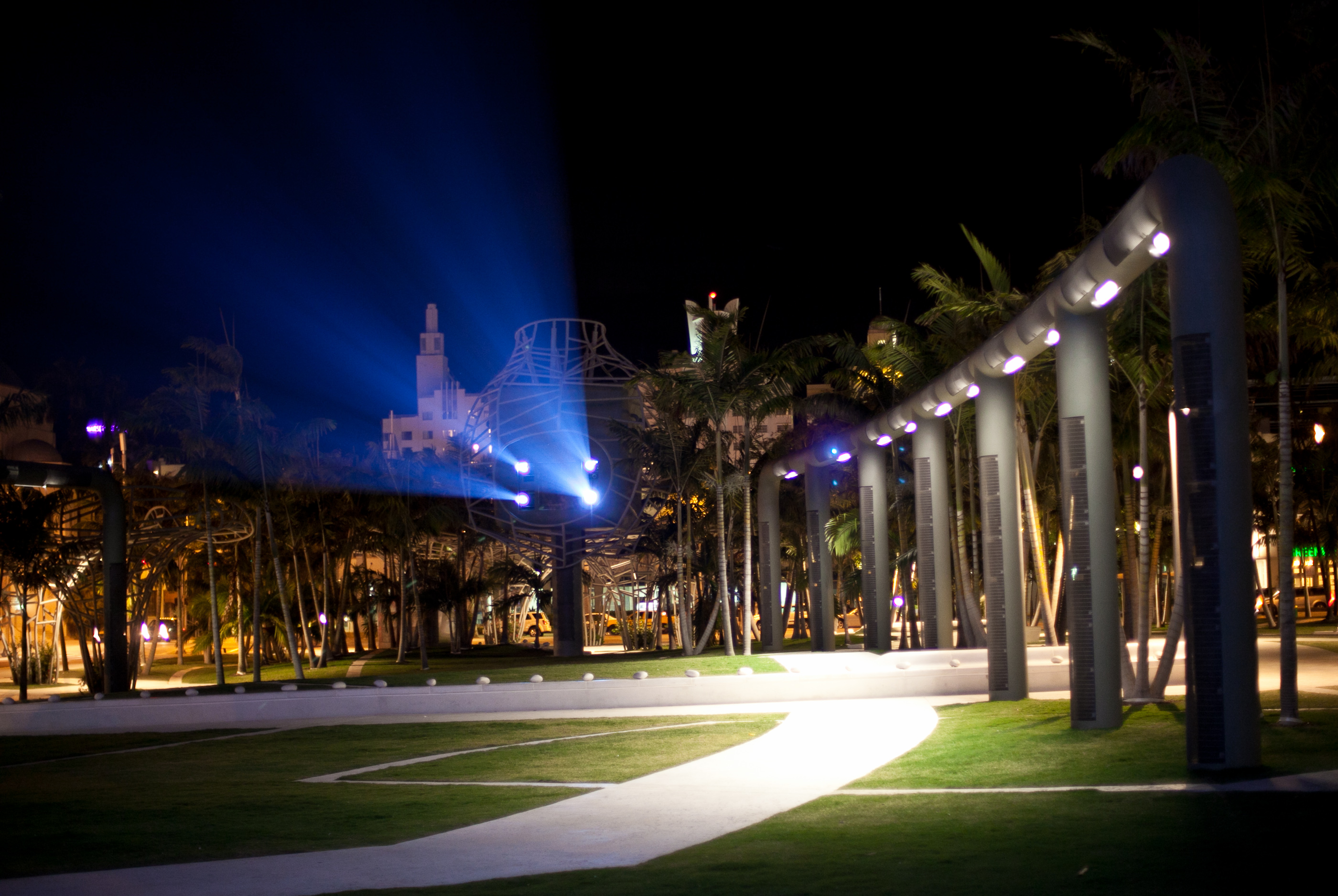
The New World Symphony paid tribute to its late co-founder, Michael Tilson Thomas, on Oct. 10 with archival footage, his compositions and an unconventional performance of Beethoven's Ninth Symphony at the New World Center in Miami Beach.
Artistic director Stéphane Denève led the orchestra in a program celebrating Tilson Thomas' musical legacy and commitment to artistic experimentation. The evening combined personal remembrances with works by Tilson Thomas, Gustav Mahler and Ludwig van Beethoven.
Lawrence Budmen, a critic for South Florida Classical Review, praised the Beethoven performance for its inventive staging and departure from conventional interpretations.
Tilson Thomas co-founded the New World Symphony in 1987 with philanthropists Lin and Ted Arison. He died April 22, 2026, after battling brain cancer.
More than 1,300 fellows have trained at the orchestral academy since its founding. The New World Center's performance hall was named in Tilson Thomas' honor following his final appearance there in May 2022.
Archival footage brings Tilson Thomas back to the stage
The concert opened with Tilson Thomas' Notturno for flute, harp and strings, featuring Seattle Symphony principal flutist Demarre McGill.
In an archival video introduction, Tilson Thomas discussed the composition's connection to 19th-century salon music and musicians Jascha Heifetz and Gregor Piatigorsky, whom he knew personally.
A video montage showed Tilson Thomas working with performers including Yo-Yo Ma, Jessye Norman and Yuja Wang, along with entertainers Audrey Hepburn and Dudley Moore.
Another tribute came during the Adagietto from Mahler's Symphony No. 5.
A silent recording of Tilson Thomas conducting the movement at an earlier New World Symphony performance played above the stage while Denève led the musicians live, following his predecessor's pacing.
The presentation created the impression of two conductors leading the orchestra across different moments in time.
Budmen praised the performance for conveying the music's emotional character without exaggeration.
Beethoven's Ninth features unconventional staging
The second half featured Beethoven's Symphony No. 9, with Denève following the composer's original tempo markings rather than the slower interpretations often heard in modern performances.
The approach produced a faster, more energetic interpretation of the work.
The orchestra's seating arrangement also departed from tradition. First and second violins were divided along the front of the stage, seven double basses occupied the far left, and percussionists performed from risers on the opposite side.
The staging became more elaborate during the final movement, which features the "Ode to Joy" theme.
At the movement's opening, Denève directed most of the musicians to stand briefly. Four vocal soloists and members of the Master Chorale of South Florida then entered from multiple levels of the performance space.
Some chorus members occupied seats above and behind the orchestra, areas normally reserved for audience members.
Soprano Ellie Dehn, mezzo-soprano Tamara Mumford, tenor Sean Panikkar and bass-baritone Dashon Burton performed the solo parts.
Dehn and Mumford had also sung in Tilson Thomas' final performance of Beethoven's Ninth with the Houston Symphony in November 2024.
During the Turkish march passage, Panikkar moved to an elevated riser while percussionists carrying cymbals, a drum and a triangle marched along the front row of audience seating.
The performance concluded with an extended ovation.
Tribute reflects orchestra's experimental legacy
Denève discussed the significance of Beethoven's Ninth in a Sept. 29 interview with South Florida Classical Review.
"Every time I have done Beethoven's Ninth, it has had the feeling of an occasion," he said.
The symphony's final movement, with its message of unity, provided a fitting conclusion to a concert honoring an educator who spent decades mentoring young musicians.
Although Denève's interpretation differed from Tilson Thomas' performances of Beethoven's Ninth, Budmen wrote that the concert reflected the late conductor's vision of the New World Symphony as both a training institution and a place for musical experimentation.
The tribute was presented Oct. 10-11 at the New World Center.
The orchestra's next scheduled program, featuring music by Steve Reich and Philip Glass under conductor Daniel Bjarnason, is set for Oct. 24-25.
Additional information about the New World Symphony's 2026-27 season is available at nws.edu.