
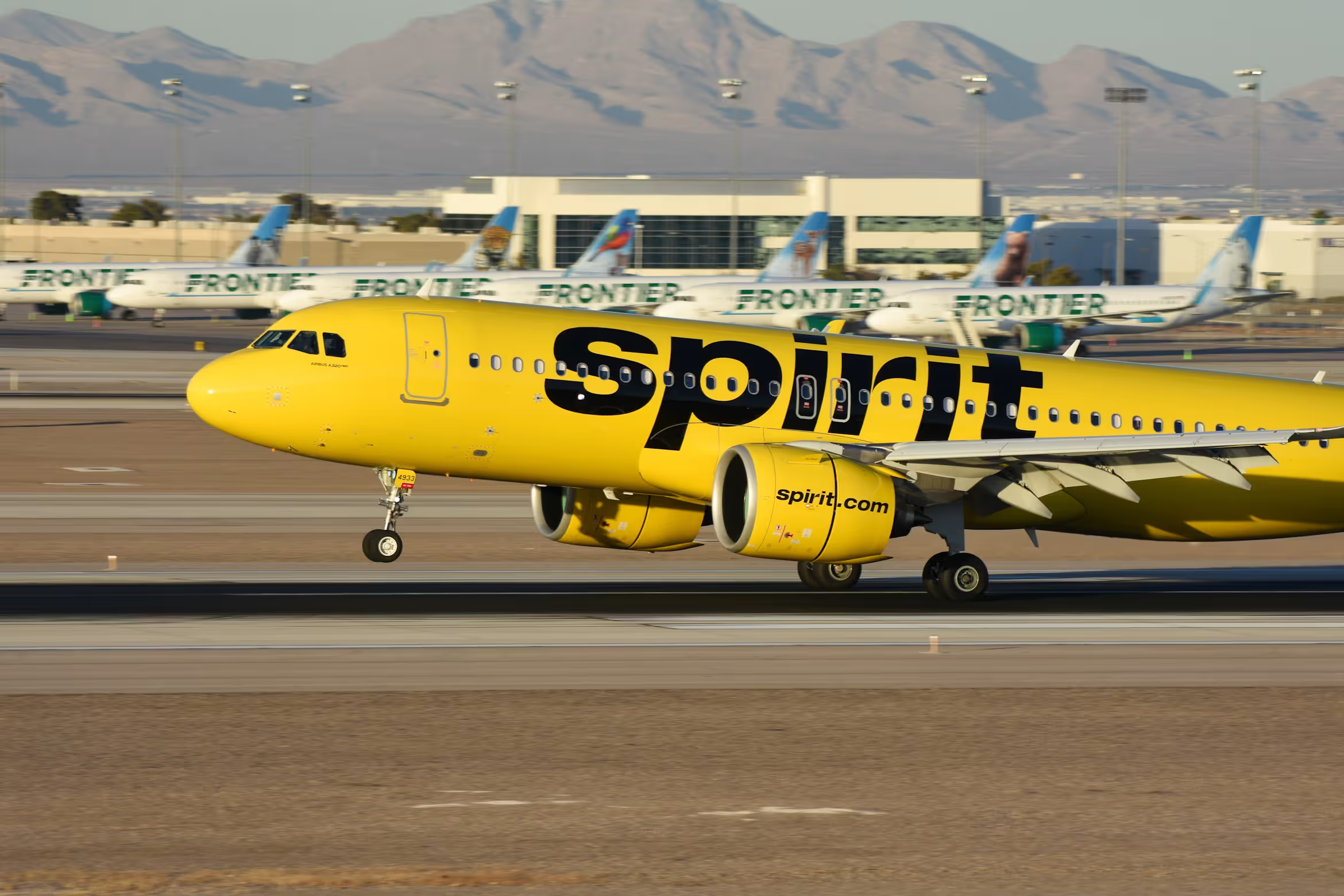
Spirit Airlines used to be the cheapest way for budget travelers to reach South Florida. Its May 2026 closure wiped out 100 peak-season daily departures from Fort Lauderdale, according to the airline's own 2025 schedule, and the pipeline of price-sensitive families and spontaneous weekenders who filled Miami Beach hotel rooms during shoulder seasons is now significantly thinner.
The question for local hospitality businesses: who replaces them?
Michael Cheng, dean of Florida International University's hospitality management school, laid out his answer in an analysis published Wednesday, July 23. The visitors coming in 2027 will spend more per trip, stay longer and arrive on international flights or in convention groups rather than on $49 Spirit fares.
"Right now the data points to fewer domestic budget travelers but more — and higher-spending — international ones," Cheng wrote.
No airline has announced plans to backfill Spirit's lost Fort Lauderdale routes. Cheng identified that gap as a key variable for 2027, along with whether jet fuel prices normalize and whether Latin American demand recovers from a 2025 dip.
Hotel market leads the nation
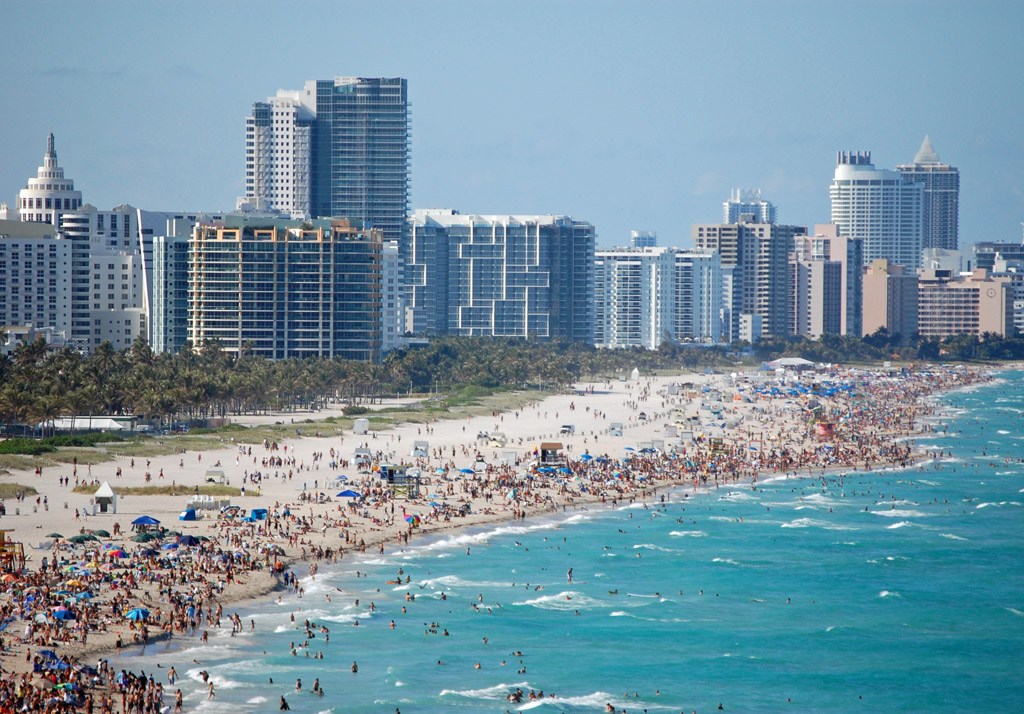
Through May 2026, Miami-Dade led all top 25 U.S. hotel markets in occupancy at nearly 80%, with the nation's highest average daily rate at $293.67, up 11.2% year-over-year, according to Greater Miami Convention & Visitors Bureau data cited by Cheng. These figures cover Greater Miami-Dade, which includes but extends well beyond Miami Beach.
International visitors spent roughly $7.2 billion in Greater Miami in 2025, about 5% more than the previous year, even as total international visitation dipped 2.8% to about 6.26 million travelers. In the first quarter of 2026, Miami International Airport processed 1.13 million international arrivals, outpacing JFK and Newark combined.
The World Cup effect was real but narrow. For the week ending Saturday, June 27, Miami's average daily hotel rate jumped 51.1% year-over-year, per CoStar data. Occupancy was relatively flat at 73.5%. Hotels charged more; they didn't necessarily fill more rooms.
Grand Hyatt and the convention bet
The biggest structural addition to Miami Beach's hospitality market is the Grand Hyatt Miami Beach, an 800-room, 17-story hotel scheduled to open in November 2027. Designed by Bernardo Fort-Brescia of Arquitectonica and developed by Terra and Turnberry, the hotel will connect to the Miami Beach Convention Center via a climate-controlled skybridge and include 52 luxury suites and four floors of meeting and ballroom space. The city held a groundbreaking ceremony in June 2025.
David Whitaker, president and CEO of the Greater Miami Convention & Visitors Bureau, called the project "a defining moment for our convention and trade-show ecosystem" in a January 2026 statement published by PCMA.
The convention calendar is already filling. PCMA Convening Leaders, described as the meetings industry's Super Bowl, runs Jan. 10-13, 2027, at the Miami Beach Convention Center. Additional 2027 conventions already contracted include Adobe's Creativity Conference, the iConnections Global Alts investor gathering, Unleash America and a Nike national tournament, according to GMCVB data cited by Cheng. Amazon, WordPress and Boston Consulting Group events are in advanced negotiations.
Cheng's bottom line: headline visitor counts in 2027 may be flat or modestly down in the domestic budget segment, but total visitor spending should hold because the mix shifts toward international, group and drive-market travelers who stay longer or spend more per trip.
The Grand Hyatt's November 2027 opening will be the first real test of whether that convention-and-international strategy can replace what Spirit took away.


.jpg)