
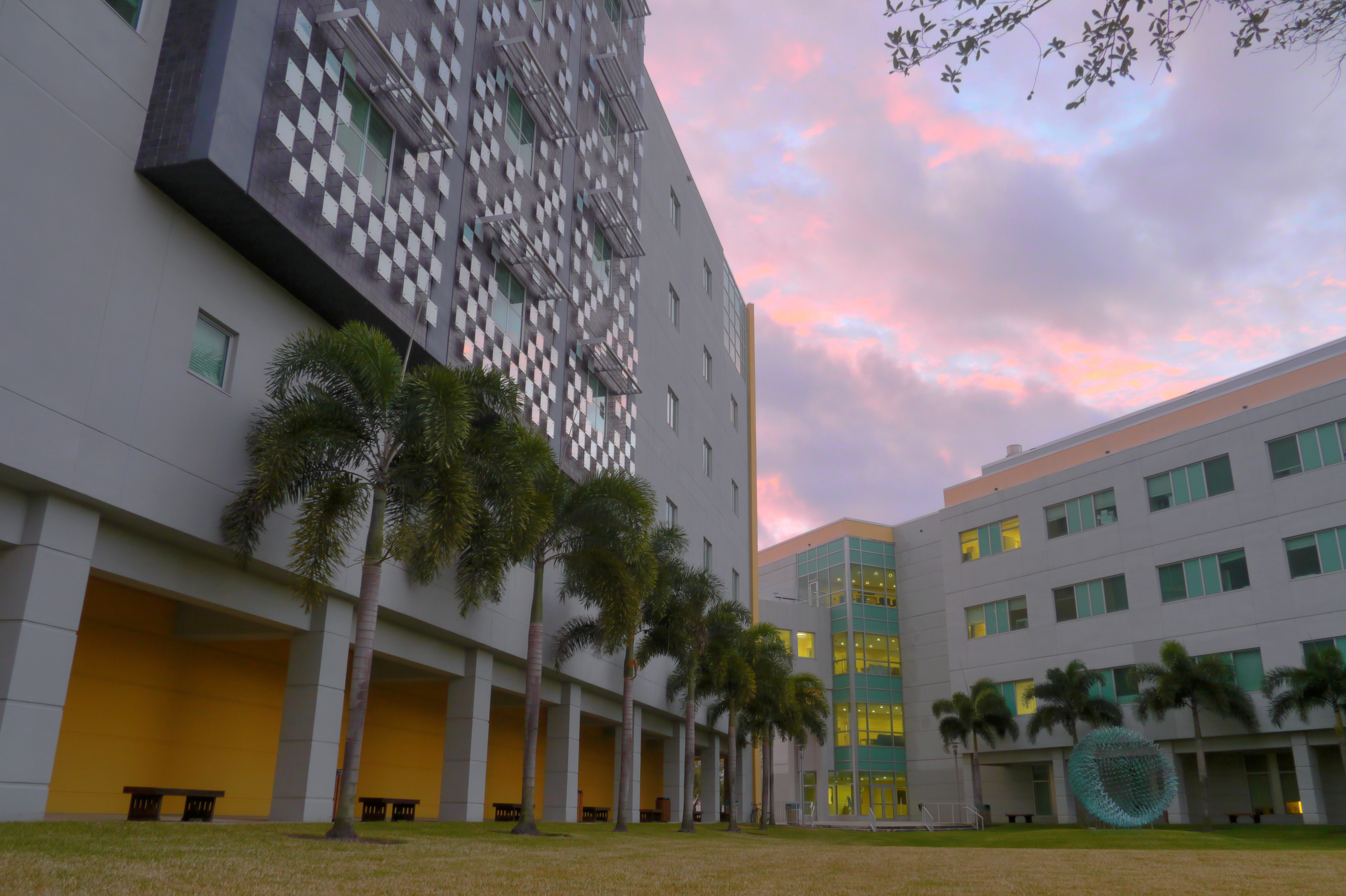
A federal appeals court affirmed Tuesday that Florida's Stop WOKE Act violates the First Amendment at state universities. The 2-1 ruling preserves classroom protections already in place for Miami Beach families with students at Florida International University and other public schools, while setting up a likely fight before the U.S. Supreme Court.
Classrooms Unaffected This Fall
Nothing changes in classrooms this fall. A lower court blocked enforcement of the law in late 2022, and the ruling from the 11th U.S. Circuit Court of Appeals keeps that injunction intact. But the decision carries weight because it is the first time a federal appeals court has found this type of academic restriction law unconstitutional, according to the American Civil Liberties Union, which supported the legal challenge.
FIU, which enrolls more than 55,800 students and operates a campus in Miami Beach, is among the state universities covered by the ruling. The law's restrictions on teaching about race and national origin had particular relevance at FIU, where 67% of students identify as Hispanic or Latino.
The Law's Restrictions on Race, Sex Discussions
Gov. Ron DeSantis signed the Individual Freedom Act, House Bill 7, in 2022. It barred professors from instruction that "espouses, promotes, advances, inculcates, or compels" students to believe certain concepts tied to race, sex and national origin. Among the prohibited ideas: that any race is morally superior, that individuals bear responsibility for historical actions by members of their race, or that concepts like merit and hard work are inherently racist.
Universities found in violation risked losing millions of dollars in performance-based funding. Individual professors faced potential termination.
The law had a documented chilling effect even while blocked. Jonathan Cox, a sociology professor at the University of Central Florida, canceled two courses exploring race and media rather than risk sanctions, according to a 2023 ProPublica investigation.
Judges Split Along Ideological Lines
U.S. Circuit Judge Britt Grant, a Trump appointee, wrote the 52-page majority opinion. Judge Charles Wilson, a Clinton appointee, joined her. Judge Barbara Lagoa, also a Trump appointee and a former DeSantis pick for the Florida Supreme Court, dissented.
"If the First Amendment offers any boundary of protection at all for public university classrooms, this statute crosses it," Grant wrote, calling the state's approach a "breathtaking assertion of power to ban unpopular ideas from public discourse."
Lagoa argued in her dissent that the law distinguished between discussing discriminatory ideologies, which remained permissible, and professors endorsing them.
Florida Attorney General James Uthmeier criticized the ruling on X, calling it "totally incoherent and inconsistent with the intent of the First Amendment."
LeRoy Pernell, a Florida A&M University law professor and lead plaintiff in one of the two consolidated lawsuits that produced the ruling, said he was thrilled the court stopped "the erasure of topics that have real implications for our students."
Supreme Court Appeal Likely
Florida can ask the full 11th Circuit to rehear the case or petition the U.S. Supreme Court. No filing deadline has been announced.
Courts in New Hampshire and Oklahoma have blocked similar laws at the district level. A related Alabama case arguing that professors' classroom speech is "government speech" the state can control is still pending before the 11th Circuit.
FIU has not issued a public statement on the ruling. Families with students enrolling for fall 2026 at any Florida public university can expect classroom instruction to continue under the same protections that have been in place since the original 2022 injunction.
.jpg)