
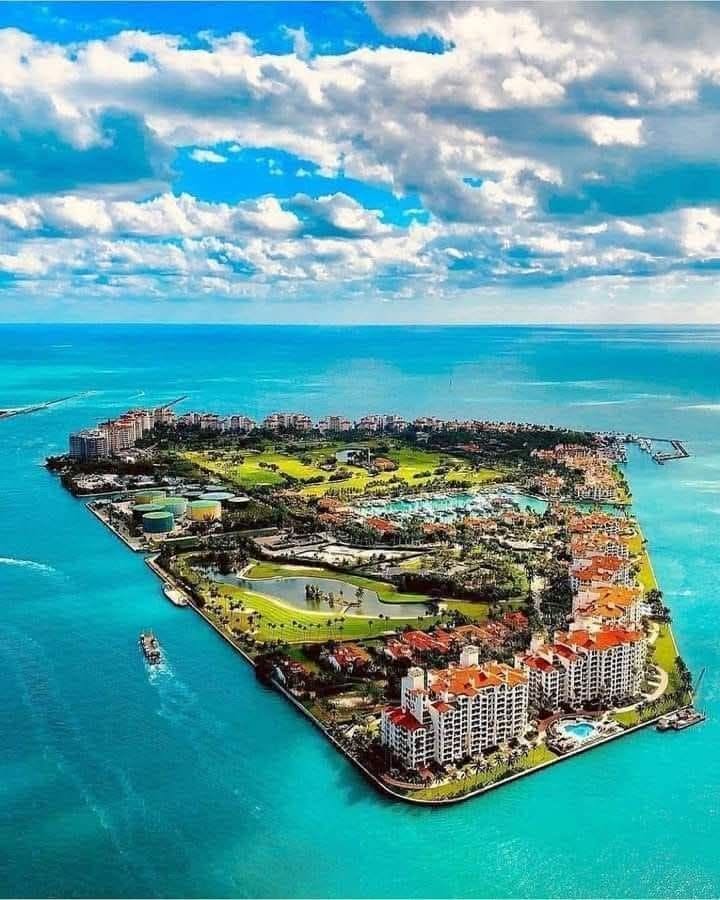
The only fuel supply for PortMiami's cruise ships and cargo vessels is headed for an eminent domain fight. Miami-Dade officials confirmed a formal purchase offer to the Fisher Island property owner is coming within days.
Deputy Mayor Roy Coley told a late-June video conference of seaport users that Mayor Daniella Levine Cava's written offer to buy the 9.6-acre fuel depot was days away. He did not cite a price. Once the offer is delivered, "the clock starts ticking" on eminent domain, Coley said.
The fuel terminal sits at the northern tip of Fisher Island, a 216-acre private enclave off the southern tip of Miami Beach accessible only by ferry, yacht or helicopter. If the county doesn't secure the property, the depot is scheduled to close in 2027, cutting off fuel to a port that supports more than 340,000 jobs and handled nearly 8.6 million cruise passengers in the fiscal year that ended Sept. 30, 2025.
Why the $400 million deal fell apart
By May 2026, the county and property owner HRP Fisher Island LLC had reached an agreement in principle: $200 million upfront plus $200 million over 20 years. The deal collapsed within days.
On Friday, June 5, Levine Cava canceled the proposed agreement. "It was simply too high a price," she said. "I will not allow developers to hold our infrastructure hostage that we know is critical to PortMiami, that is critical to our jobs, to our economy."
The Miami-Dade County Commission voted 12-1 at its June meeting to support pursuing eminent domain, with compensation to be determined through the courts.
How the property changed hands and sparked a fight
TransMontaigne Partners sold the fuel depot to HRP Fisher Island LLC for $180 million in September 2025, after the parcel sat on the market for about a year with no county offer. HRP is a joint venture that includes Chicago-based HRP Group, Jorge Perez's Related Group, Raycliff Capital and GFO Investments. The developers had planned two 13-story ultra-luxury condo towers with an expected $2 billion total sell-out and penthouses listed at $100 million.
HRP Group CEO Roberto E. Perez pushed back hard, saying in a statement that the county's predicament stems from "its own incompetence after years and frankly decades of failure to plan for PortMiami infrastructure." The company has vowed to fight any condemnation.
Separately, the Fisher Island Community Association and Fisher Island Club filed a circuit court lawsuit Thursday, May 28, alleging HRP violated binding agreements by negotiating a sale to the county instead of proceeding with residential redevelopment.
What the legal process looks like from here
Under Florida law, once the mayor delivers the formal offer, HRP has at least 30 days to review it. If no agreement is reached, the county can file an order of taking in circuit court with a deposit for the estimated property value. If that doesn't settle the matter, a 12-person jury would decide the price.
Coley, who also became interim PortMiami director Wednesday, July 1, after Frederick P. Wong Jr. retired at the end of June, assured port users the facility would not lose fuel access. He cited fueling tenders from Port Everglades as one stopgap but ruled out trucking or tapping Miami International Airport's pipeline. "The airport's going to run out of capacity for its own needs," Coley said.
Incoming port director Jonathan Daniels is scheduled to start in August. No next commission meeting date specific to the eminent domain proceeding has been announced; the 30-day statutory review window begins when HRP receives the formal offer.



.jpg)