
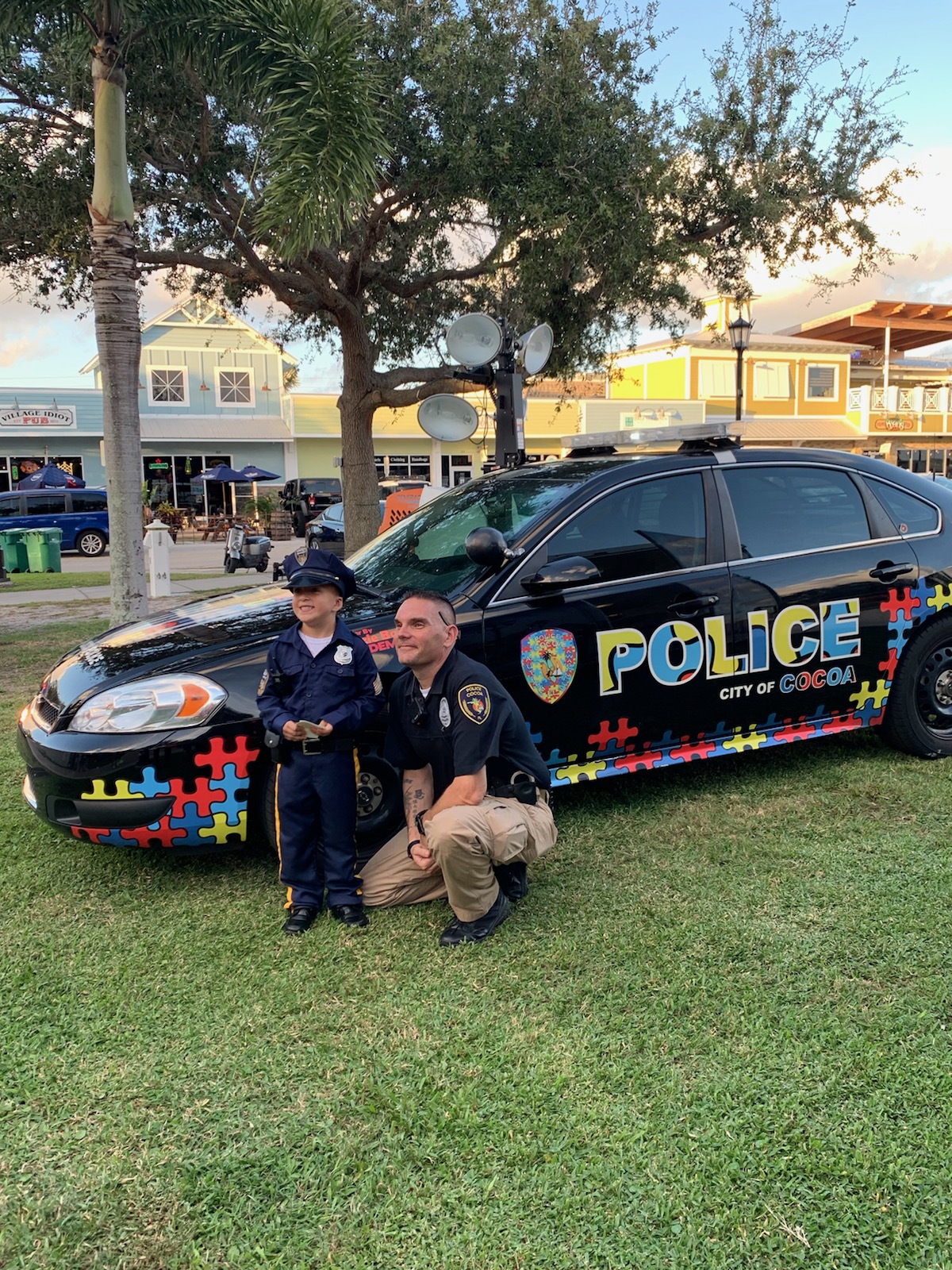
A policing program born inside the Bal Harbour Police Department is now state law, requiring every law enforcement agency in Florida to train officers on interacting with individuals with autism spectrum disorder.
Gov. Ron DeSantis signed Senate Bill 418 on June 16, making Florida one of a growing number of states to require autism-awareness training for law enforcement. The law took effect July 1.
The concept originated in the Bal Harbour police chief's office, according to the village's official announcement published Monday, July 21. In January, Chief Flowers sent Detective Hector Gonzalez to Tallahassee to lobby lawmakers in person. Gonzalez addressed the Florida Senate alongside the bill's primary sponsor, Miami Gardens Democratic Sen. Shevrin Jones, and worked with Tampa Republican Rep. Susan Valdés, who sponsored the House companion bill, HB 365.
The effort paid off. SB 418 passed the Senate 38-0 on Thursday, Feb. 19, then cleared the House 111-0 on Tuesday, March 10. The Senate concurred with a House amendment, 37-0, the following day.
"This is a public safety bill as well as just being thoughtful," Valdés said on the House floor March 10, her final bill presentation before reaching term limits in November. "Autism does not present itself in a way that you can see it. It is a unique diagnosis, and it is important for law enforcement to be able to recognize those signs."
Under the new law, the Florida Department of Highway Safety and Motor Vehicles must make blue envelopes and blue cards available to individuals with ASD by Jan. 1, 2027. The envelope holds a driver's license, vehicle registration, proof of insurance and emergency contact information. Its exterior identifies the holder as having ASD and includes communication guidelines for officers. The blue card, available in wallet-sized or digital form, extends the program beyond traffic stops to other law enforcement encounters.
Participation in the blue envelope and blue card program is voluntary.
The law also creates a mandatory training curriculum covering de-escalation strategies, interviewing techniques, locating missing individuals with ASD, and distinguishing autism-related behaviors from belligerence. All law enforcement recruit training must include the curriculum by July 1, 2028, and all certified officers in Florida must complete it by July 1, 2030. Bal Harbour's autism training objectives helped shape the statewide curriculum framework, according to the village's July 21 announcement.
Implementation is expected to cost about $130,000, split between the Florida Department of Law Enforcement, which will spend about $64,000 on training programming, and DHSMV, which will spend about $66,000 on materials and shipping. Both agencies will absorb the costs within existing budgets.
More than a dozen states have adopted or are pursuing similar programs, Jones said on the Senate floor Feb. 19. Residents with ASD or family members seeking more information can contact the Bal Harbour Police Department or visit the DHSMV website when enrollment opens Jan. 1, 2027.

.jpg)