
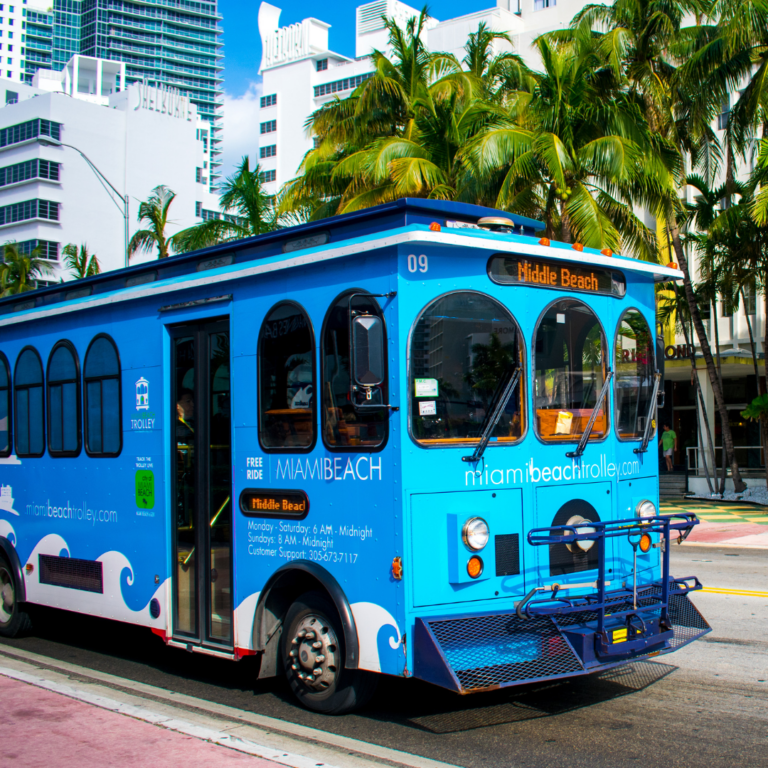
Miami Beach commuters who catch early-morning or late-night buses across the causeways could lose service under Miami-Dade County Mayor Daniella Levine Cava's proposed $14.3 billion budget for fiscal year 2027, which would eliminate 12 bus routes countywide and slash hours on dozens more.
The primary Miami Beach causeway routes are not among the 12 lines slated for elimination. Route 100 via MacArthur Causeway, Route 14 to Mount Sinai Medical Center, Route 36 via Julia Tuttle Causeway and Route 101 via MacArthur Causeway all survive. But the budget proposes ending service before 6 a.m. on 44 county-operated routes and cutting service after 10 p.m. on additional lines, changes that would hit Beach residents who rely on transit for shift work, hospital jobs and late-night service-industry commutes.
The 12 routes proposed for elimination are the 16, 25, 42, 57, 70, 132, 203, 204, 272, 279, 288 and 338. Together they carry about 4,400 riders per weekday. County officials told CBS Miami the combined cuts would affect roughly 7,500 people, or 10% of all riders.
$89 million rail reserve drained
The budget also proposes spending the entire $89 million balance of the Transportation Infrastructure Improvement District fund, a reserve created in 2018 to build future rail extensions under the county's SMART Plan. The fund collects property taxes from parcels near transit lines. Miami-Dade already drew about $55 million from the TIID in the current fiscal year; the new proposal would empty what remains to cover day-to-day transit operating costs.
That leaves no money for rail expansion projects like the proposed $4 billion Miami Gardens extension, according to Miami Herald reporting on the budget.
Commissioner Oliver Gilbert pressed budget director Ray Baker on the plan at a July 15 Transportation Committee meeting. "We have to come up with a plan," Gilbert said. "There is a crash coming."
Structural gap
The transit system faces a structural funding shortfall driven by a state law change that costs the county roughly $25 million per year in lost sales-tax revenue from commercial leases. Last year, Levine Cava proposed a 50-cent fare hike and a gas-tax increase to close the gap; commissioners and transit advocates pushed back, and both proposals were dropped.
The overall FY2027 budget is up about $1 billion from the current year, partly because of $66 million in new costs from five constitutional offices created in 2025. Property tax rates would remain flat.
Commissioner Marleine Bastien, who represents one of Miami-Dade's poorest districts, warned at a July county meeting that residents already struggle with prior service reductions. She said her office receives daily calls from elderly residents on fixed incomes who can no longer reach grocery stores by bus.
Miami Beach has pushed back before
The Miami Beach City Commission passed a resolution in September 2025 opposing the county's FY2026 transportation fee increases, including proposed Metrobus fare hikes and the elimination of MetroConnect. That resolution, sponsored by Commissioner David Suarez, urged the county to find alternative funding sources.
This year's proposal does not include fare increases but trades them for service cuts and the reserve drawdown.
How to weigh in
Levine Cava is hosting six "Conversations with Cava" town halls throughout August, running 6 p.m. to 8 p.m. None of the six sessions are on Miami Beach. The nearest upcoming dates are at Miami-Dade Main Public Library on Friday, Aug. 7, and Arcola Lakes Senior Center on Monday, Aug. 10. Registration is encouraged but not required.
The Miami-Dade County Commission is expected to hold formal budget hearings in September, with a final vote anticipated Thursday, Sept. 17. This is a proposed budget subject to change at that vote. The adopted budget would take effect Oct. 1. Residents can review the full proposal at miamidade.gov.






.jpg)